
HSPCB's New Directive for Haryana Industries: Mandatory CCTV/PTZ Camera & Zig-Zag Chimney Installation — Deadline & Compliance Guide
HSPCB mandates CCTV/PTZ cameras, CSIR-NPL certified OCEMS stack emission monitoring and zig-zag chimneys for Haryana industries. Deadline, Environmental Compensation (EC) penalty and checklist.
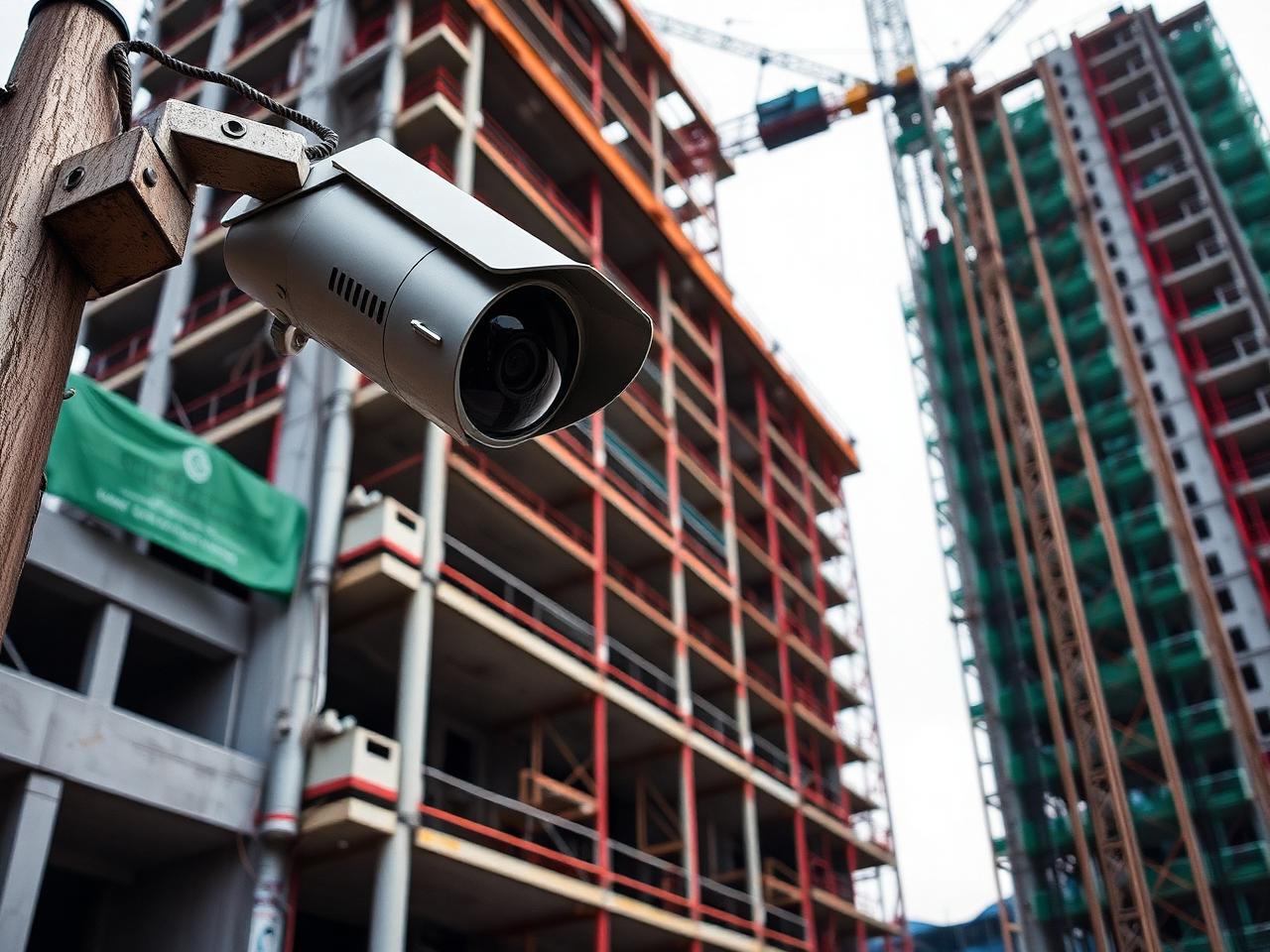
Closure Risk Alert: HSPCB Tightens the Net on Haryana Industries
The Haryana State Pollution Control Board (HSPCB) has issued a strict new compliance mandate requiring industries across the state's NCR districts — starting with rice mills — to install CCTV/PTZ cameras and zig-zag or spiral staircase chimneys, along with other pollution-control measures, or face closure.
The order has already triggered pushback. Industry bodies including the Haryana Rice Exporters' Association have met the HSPCB Chairperson and the Haryana Assembly Speaker to request an extension of the compliance timeline to March 31, 2027, arguing the current schedule is impractical and expensive. Whether or not that extension is granted, one thing is clear: HSPCB is actively inspecting sites, and units without the mandated equipment are exposed to closure notices and Environmental Compensation penalties right now.
If your unit falls anywhere in Haryana's NCR belt — Gurugram, Faridabad, Sonepat, Panipat, Rohtak, Jhajjar, Rewari, Bhiwani, Charkhi Dadri, Mahendragarh, Nuh, Palwal or Karnal — this is not a notice to file away for later.
What's Changed: Understanding the HSPCB Mandate
Who Is Affected
HSPCB's latest push targets:
- Rice mills — the first sector named, required to install zig-zag/spiral staircase chimneys and CCTV/PTZ surveillance
- Red-category and other air-polluting industries operating boilers, furnaces, kilns or stacks
- RMC (Ready-Mix Concrete) / batching plants
- C&D waste processing and disposal facilities
- Construction & demolition sites above 500 sqm already under HSPCB's Dust Portal norms
This sits alongside — and reinforces — the Commission for Air Quality Management's (CAQM) broader dust-control direction dated 11.06.2021, which already requires continuous PM2.5/PM10 sensors, CCTV/PTZ cameras and anti-smog guns at qualifying construction sites in Haryana's NCR districts.
Why Now
HSPCB officials have framed the move as aimed at improving workplace safety, strengthening regulation and ensuring compliance with environmental standards. It also lines up with a wider national push: the Central Pollution Control Board (CPCB) issued fresh directions in October 2025 and again on January 12, 2026, requiring State Pollution Control Boards across the NCR — including HSPCB — to make Online Continuous Emission Monitoring Systems (OCEMS) and PTZ cameras a mandatory condition of Consent to Operate (CTO) for 17 high-pollution sectors, common waste facilities and Red-category air-polluting units. CPCB's own audit found that of 2,361 identified polluting units in the NCR, only 351 had actually connected their systems — the rest are now squarely in the regulator's sights, and HSPCB-regulated units in Haryana's NCR districts are not exempt.
What the Directive Requires: CSIR-NPL Certified OCEMS and Stack Emission Monitoring
In plain terms, the directive asks two things of a Haryana unit: prove what is leaving your stack, and let the regulator see it. The first is delivered through an Online Continuous Emission Monitoring System (OCEMS) doing continuous stack emission monitoring; the second through PTZ cameras trained on the stack outlet and the monitoring cabinet. Both are increasingly written straight into the Consent to Operate (CTO) condition, and asked about at the Consent to Establish (CTE) stage for new units.
For rice mills (and similarly-placed industries)
- Zig-zag or spiral staircase chimney construction, replacing older stack designs
- CCTV/PTZ camera coverage of the plant and stack area, streamed for HSPCB inspection
- Continued adherence to prescribed stack emission norms, evidenced by stack emission monitoring records
For Red category industries Haryana and the 17 high-pollution sectors
- Online Continuous Emission Monitoring System (OCEMS) installed at emission points, transmitting real-time emission data to CPCB/HSPCB servers
- Stack outlet PTZ camera monitoring, covering both the emission point and the analyser shelter
- CSIR-NPL certified OCEMS analysers only — uncertified systems are rejected at the connectivity stage
- DVR/NVR backup camera feed retained on site so footage can be produced if the live link drops during inspection
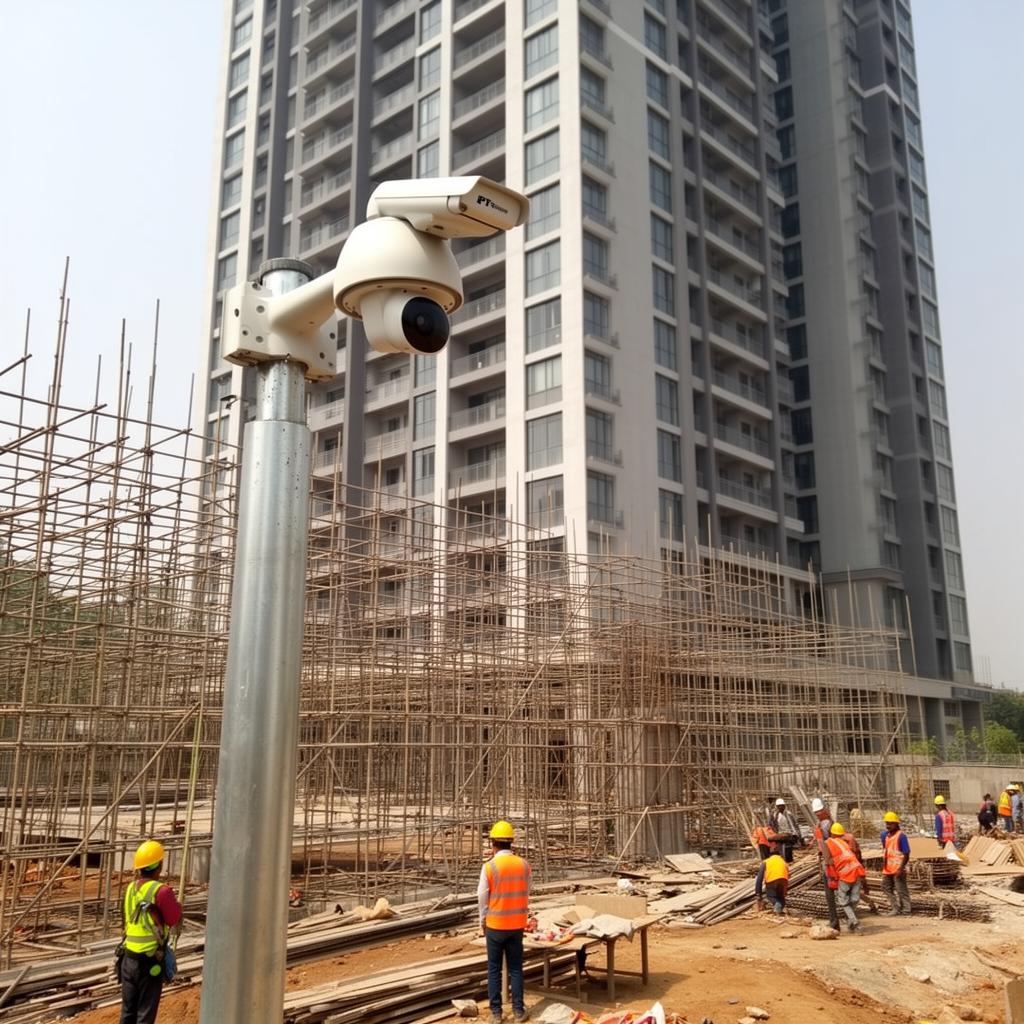
For construction, RMC and C&D waste sites (existing CAQM / Dust Portal norms)
- Continuous PM2.5/PM10 sensors live-linked to the HSPCB Dust Portal (dustapp.hspcb.org.in)
- PTZ CCTV cameras at the site boundary
- Anti-smog guns sized to plot area, green-net barricading and water sprinkling
Industries that have already installed and connected online emission monitoring or PTZ systems to CPCB/HSPCB, while maintaining prescribed stack emission levels, are not expected to retrofit again — but proving that connection is live and audit-ready is now the burden of proof.
The Deadline — and the Industry Pushback
HSPCB has linked non-compliance to closure, giving industries a hard timeline to act. Rice millers and exporters, through their associations, have asked CAQM to push the deadline to March 31, 2027, and have also sought rationalisation of air pollution control device (APCD) requirements for the sector.
That request is still pending. Until any extension is formally notified, the operative deadline for affected units remains the one HSPCB has already communicated — and inspections during GRAP-2 and GRAP-3 stages have shown the board is willing to issue closure notices and Environmental Compensation penalties in the interim. Waiting for an extension that may or may not arrive is a real business risk.
Consequences of Non-Compliance: Closure Orders and Environmental Compensation (EC) Penalty
The financial exposure is not theoretical. Where a unit is found running without the mandated cameras or monitoring, HSPCB has levied an Environmental Compensation (EC) penalty alongside the closure route — and the amount is calculated on the scale and duration of the default, not on your intent to comply.
- Closure orders for the unit
- Environmental Compensation (EC) penalty, in addition to action under the Air Act, 1981 and Water Act, 1974
- Show-cause notices requiring a rapid, evidence-backed response
- Suspension of Consent to Operate (CTO) where OCEMS/PTZ connectivity is a stated condition
- Tighter GRAP compliance Haryana industries scrutiny in subsequent winter seasons once a unit is flagged
- Knock-on damage to ESG standing, lender due diligence and future clearance applications
Haryana Compliance Checklist
- ☐ Confirm whether your unit falls in a Haryana NCR district and which category (rice mill, Red-category industry, RMC plant, C&D site, C&D waste facility) applies to you
- ☐ Verify existing chimney design — is a zig-zag/spiral staircase retrofit required?
- ☐ Confirm CCTV/PTZ camera coverage of stack area and site boundary, with a working RTSP feed
- ☐ Check whether OCEMS applies to your sector, and confirm equipment is CSIR-NPL certified
- ☐ Register or verify your listing on the HSPCB Dust Portal (dustapp.hspcb.org.in) if applicable
- ☐ Assemble documentary evidence — geotagged photos, RTSP link proof, calibration records — in case of a show-cause notice
- ☐ Do not wait on the CAQM extension decision before starting equipment procurement
How Garg Infratech & Consultants Can Help — HSPCB Closure Notice Consultant Support
We are a Delhi NCR–based environment consultancy working across DPCC, HSPCB, UPPCB and RSPCB, and HSPCB compliance is one of our core verticals. For Haryana industries and construction sites, we handle:
- HSPCB Dust Portal registration and self-assessment filing
- PTZ camera supply, installation and RTSP link generation/integration with the regulator's portal, including DVR/NVR backup camera feed on site
- AQI/PM2.5/PM10 sensor installation with live feed to the HSPCB dashboard
- OCEMS advisory and coordination for Red-category units, so real-time emission data actually lands on the CPCB/HSPCB server
- Anti-smog gun sale and rental, sized to plot area
- Monthly audit reports and photo-evidence compliance filing
- Drafting a show-cause notice reply HSPCB officers will accept, and rapid response to stop-work and closure notices
If your site or unit falls anywhere in Haryana's NCR districts and you're unsure whether the new CCTV/PTZ or chimney requirements apply to you, a free compliance check is the fastest way to find out before an inspection does. Talk to an HSPCB compliance specialist at https://gargdpcc.com/haryana
Conclusion: Don't Wait for the Extension to Be Decided
HSPCB's direction is unambiguous: install the required cameras, chimneys and monitoring equipment, or risk closure. An extension request is pending, not granted. Industries that get compliant now — rather than betting on a later deadline — avoid both the immediate penalty risk and the scramble that comes with a sudden inspection.
Get your free HSPCB compliance assessment: gargdpcc.com/haryana · 📞 +91-83681-80378 · 💬 WhatsApp
Frequently asked questions
Does the CCTV/PTZ and zig-zag chimney mandate apply only to rice mills?
Rice mills are the sector named first, but the underlying push for CCTV/PTZ surveillance and emission-point monitoring extends to Red-category and other air-polluting industries in Haryana's NCR districts under CPCB and CAQM directions.
Has the March 2027 extension been approved?
Not as of this writing. Industry associations have requested it from CAQM; the current HSPCB-communicated deadline remains in force until any extension is officially notified.
What happens if HSPCB inspects before I'm compliant?
Based on past GRAP-stage inspections, HSPCB has issued closure notices and Environmental Compensation penalties to non-compliant units. A show-cause notice typically requires a documented response within a short window.
Is my existing CCTV setup enough, or do I need a specific type of camera?
HSPCB inspection generally expects PTZ (pan-tilt-zoom) cameras covering the stack/monitoring area with a live, verifiable feed — a basic fixed CCTV camera without RTSP connectivity to the regulator's portal is unlikely to satisfy the requirement.
Do construction sites need to do anything beyond what's already required under the Dust Portal?
If you're already registered and live on the HSPCB Dust Portal with a working AQI sensor and PTZ camera feed, your core obligations are likely covered — but it's worth confirming your equipment and documentation are inspection-ready given the increased scrutiny.
Need help with this on your site?
Talk to our compliance team for a free site visit anywhere in Delhi NCR.